


Skip Navigation

Grief Counseling in Scottsdale, AZ

Grief and Loss Counseling

Grief counseling is available to Scottsdale residents at Biltmore Psychology & Counseling, a licensed practice that has served the Scottsdale area since 2012. Our psychologists and counselors work with people after the death of a loved one and after other significant losses, at whatever pace suits them. Sessions are available in person at our office near Biltmore Fashion Park and online anywhere in Arizona. Free 10-minute consultation: (480) 999-7070.

Grief counseling focuses on offering support for individuals who are undergoing loss and bereavement. For many of us, the word grief is something that brings up a vast array of emotions from pain and confusion, to discomfort and avoidance. While intuitively we all know that pain and loss is something that we may all encounter at some point in our lives, we are still often left with a loss for words when the tragedy of loss or death does occur. Like many things in life, grief is complex. It comes, it goes, and can surprise us 5 months, 5 years, and even 50 years later. It is a journey that no two individuals can experience in the same way, even in the face of the same loss.

Within our practice, we help people navigate the painful emotions and changes that come from loss and death in a way that is unique for each person. In our sessions, we will help each person understand what normal grief looks like, give tools to heal and grieve freely and provide support and understanding through this difficult time.

Individuals often seek grief counseling related to the following:

  • Death of a parent, spouse, partner, child or friend
  • Ending of a significant relationship with a spouse or partner
  • Significant changes in one’s health or a loved one’s health
  • Miscarriage and/or difficulty with fertility
  • Recent loss of one’s job
  • Loss or death of a family pet

Our counselors are trained to help you through your journey with grief by ensuring you are fully supported, heard and understood. As there is not a “fix” for grief, BPC therapists will not seek to “cure” you but rather accompany as you process through the various parts of grief.

What counseling adds is somewhere to put the loss, and someone who will not try to move you along faster than you are ready to go.

Grief Counseling for Scottsdale Residents

Our office is at 6245 N 24th Parkway near 24th Street and Camelback, next to Biltmore Fashion Park, about 20 minutes west of Old Town Scottsdale on Camelback Road. We see clients from Old Town, Arcadia, McCormick Ranch, Gainey Ranch, North Scottsdale, DC Ranch and Grayhawk.

Grief does not run on a schedule, and neither should the support around it. Some people want weekly sessions from the start. Others want somewhere to go on the difficult weeks, around an anniversary or a birthday or the first holiday without someone, and nothing in between. Both are fine, and we will not push you toward a cadence that does not fit.

Online sessions are available to any Arizona resident, which matters more here than on most pages. Grief has a way of making the ordinary logistics of a day feel like too much, and on those weeks the difference between a session that happens and one that does not is often just whether you had to get in the car.

If the loss involved a long illness, or if it has left you with depression rather than grief, that is the work to start with, alongside everything else we offer locally in Scottsdale.

Grief Counseling FAQ

In our society, we have grossly unrealistic ideals of what grief should look like. We often expect the experience of grief to be brief, simplistic and follow a step by step pattern or emotion. Additionally, our society feels very uncomfortable with grief and often withdraws from individuals going through this experience. Grief counseling helps individuals identify what healthy grief looks like and gives them tools to process through this complicated experience.

Grief counseling seeks to help individuals who have experienced loss find a healthy way to process feelings of sadness, despair, anger, hopelessness, and other complicated emotions that surround grief. It also seeks to normalize the experience as many who are experiencing healthy grief feel as though they are “doing it wrong.”

Every person can have a different experience of grief and there is no one “right way” to grieve. Circumstances surrounding grief can make the experience look different for each person. Below are a few examples:

  • Anticipatory grief. Progressive diseases such as Alzheimer’s disease can lead to anticipatory grief that begins as that person slowly loses abilities and core parts of the personality are changed.
  • Off time loss. Death at a young age can bring a grief that is due to an “off time loss”. While losing a loved one at an older age is also difficult, death at an age that is deemed “too young” can bring complex emotions.
  • Infertility grief. Infertility grief can come from a grief of what did not occur and may include feelings of shame, regret and self-blame.

Many confuse grief and depression symptoms. And while both conditions usually include feelings of sadness, these two conditions are very different.

Elisabeth Kübler-Ross famously stated that people experiencing grief go through five stages: denial, anger, bargaining, depression, and acceptance.

In our experience, people do not necessarily feel these feelings in isolated stages, but instead experience all of these complex emotions at once. This is what makes grief so disorienting, confusing, and complicated. Often coming in waves, people can feel absolute hopelessness, relief that the suffering is over, anger for what has taken place, and anxiety about how to live with the future. Then in an hour or a week, the wave of emotion may pass, coming and going, coming and going.

It is worth knowing that Kübler-Ross developed the five stages by observing people facing their own deaths rather than people who had been bereaved, and that grief researchers since have found it is not experienced as an orderly sequence. People move between states, revisit ones they thought were finished, and skip others entirely. If your grief does not resemble the stages, nothing has gone wrong.

Intense sadness, changes in motivation, sleep, and appetite are just a few of the overlapping symptoms between grief and depression. For individuals experiencing these symptoms for the first time, it can be pretty disconcerting to observe these changes in mood after the loss of a loved one. Clients will ask us if they are depressed when, in fact, they are experiencing very normal symptoms of grief.

The short version: grief comes in waves and stays connected to the person you lost, while depression tends to be flatter, more constant and more global. In grief, moments of warmth and even humor usually remain accessible between the waves, and self-worth generally stays intact. In depression, the low mood is more continuous, pleasure is harder to reach in any area, and self-criticism is often severe. The two also coexist, and grief can develop into depression, which is worth attention rather than alarm. If what you are experiencing looks more like the second description, depression counseling covers that work.

Treatment for grief can be a bit different than treatment for other distress. It is important to remember that grief is a healthy reaction to the loss of someone that we love. While the sadness, tears, frustration, anger, and confusion may feel very uncomfortable and may not be emotions that one is used to, it still is very normal. In therapy, a therapist will help each individual process through the loss in a way that feels supportive, healthy, and grounded.

Grief therapy may focus on what has been lost and how the needs that a person has met can be found in another way. It may focus on processing through complicated parts of the relationship that will never have the opportunity to heal or change now that the loved one is gone. Or, it may focus on how to honor the life of the loved one and how to find new meaning in life that allows that person to live on in us or the world around us.

Where the grief has become stuck, meaning it is not shifting at all over a long period or is dominating daily functioning, more structured approaches help: cognitive behavioral work on the beliefs grief can leave behind, particularly guilt and self-blame, and EMDR where the death itself was traumatic or the memory of it intrudes. Group support suits some people and not others.

Approaches to grief therapy will be as individualized as there is no “right” way to grieve. Grief will not last forever, and it’s important to know that you do not have to grieve alone.

There is no right or wrong time to start grief counseling, and a grief counselor can help people wherever they are in the process. Our society tends to think that grief is a short-term experience, usually resolved within a few months. In reality, grief is often a process that can take years to work through. Many people find that the intensity of their emotions varies for a long time, often measured in years rather than months.

The circumstances surrounding the loss can make the experience more brief or more complex. While grief is a normal reaction to loss, grief counseling can be very helpful throughout the process. Many people choose a grief counselor shortly after the diagnosis, news or loss, while others seek support in the months after when the support and care from others may begin to decrease.

Our grief counselors do not shy away from grief or feel uncomfortable talking about this complex experience. While our society often feels a great sense of awkwardness for individuals grieving, our grief counselors feel honored to help people walk through their grief experience.

In counseling our therapists will help people normalize their experience and find adaptive tools to help them process through the complex, painful experiences of grief.

Our office is in Phoenix at 6245 N 24th Parkway, near 24th Street and Camelback beside Biltmore Fashion Park, about 20 minutes from Old Town Scottsdale on Camelback Road. We have served the Scottsdale area since 2012, and we also offer online sessions to any Arizona resident.

Yes. Online sessions are available to any Arizona resident. Grief makes ordinary logistics feel heavy, and on the weeks when leaving the house is more than you have in you, an online session is a session that still happens. You can move between online and in person as it suits you. Call (480) 999-7070 to arrange it.

Biltmore Psychology & Counseling is an out-of-network provider and does not bill insurance directly. If your plan includes out-of-network mental health benefits, we provide a receipt you can submit to your insurer for reimbursement, and many clients are reimbursed for a portion of each session.

Fees vary by clinician and by the type of session, so call (480) 999-7070 and we will give you the current rate before you book anything.

Start your journey with confidence

In a free, no-obligation 10-minute consultation we can tell you whether our services are the right fit, with no pressure to decide anything.

Our licensed clinicians support Scottsdale residents through grief and loss, in person at our Biltmore-area office and online throughout Arizona.

Biltmore lobby chairs

Start your journey with confidence

In a free, no-obligation 10-minute consultation we can tell you whether our services are the right fit, with no pressure to decide anything.

Our licensed clinicians support Scottsdale residents through grief and loss, in person at our Biltmore-area office and online throughout Arizona.

Meet Our Team

Dr Melissa Estavillo

Dr. Melissa Estavillo

Psy.D. Clinical Psychology,
Arizona School of Professional Psychology M.A. Clinical Psychology,
Arizona School of Professional Psychology
B.S. Psychology,
Grand Canyon University

Dr. Linda DeBiase

Dr. Linda DeBiase

Forest Institute of Professional Psychology, Doctorate in Clinical Psychology
Lake Forest College
B.A. Psychology California School of Professional Psychology,
Clinical Psychology
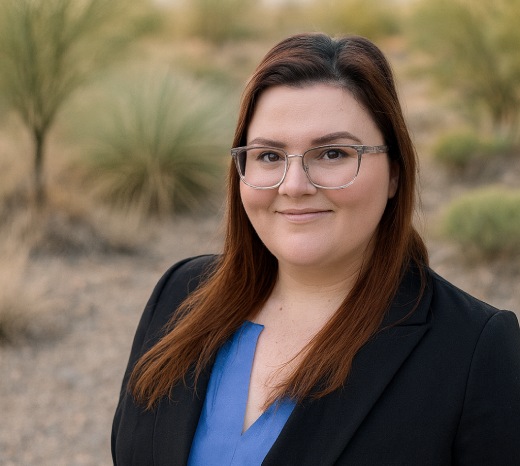
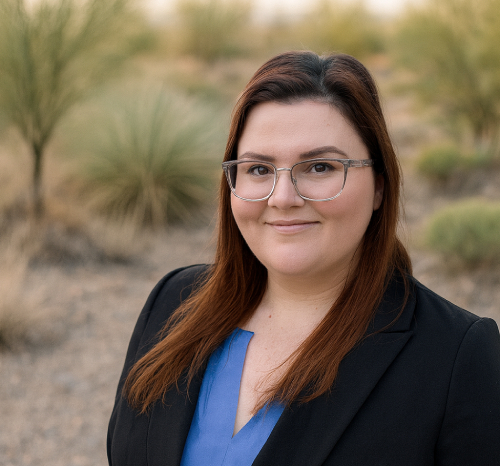
Dr. Nikki Kemper PsyD

Dr. Nikki Kemper

Psy.D. Clinical Psychology, Midwestern University
Masters in Clinical Psychology, Midwestern University

Dr. Cynthia Regardie Psy.D.

Dr. Cynthia Regardie

Psy.D. Clinical Psychology, Rosemead School of Psychology
M.A. Clinical Psychology,
Rosemead School of Psychology B.A. Psychology,
University of California, Irvine

Nicole Elliott, LPC, PMH-C

Nicole Elliott, LPC, PMH-C

M.C. Counseling,
Arizona State University
B.A. English (Literature),
Arizona State University

Elizabeth Felix, LPC

Elizabeth Felix, LPC

M.A. Professional Counseling, Ottawa University
M.A. Human Resources and Substance Abuse,
Ottawa University
B.A. Psychology,
Ottawa University

Laura Reed, LPC

M.S. Professional Counseling,
Grand Canyon University
B.S. Psychology,
Grand Canyon University

Rebecca Fregoso, LPC

Rebecca Fregoso, LPC

M.S. Counseling,
University of Phoenix
B.A. Psychology,
California State University

Kirsten Eby

Kirsten Eby, LPC, ATR-BC

M.S. Art Therapy Counseling
Southern Illinois University, Edwardsville
M.A. Teaching, Elementary
American University
B.A. Psychology & Sociology
Tulane University

Join our Team
Dr Melissa Estavillo

Dr. Melissa Estavillo

Psy.D. Clinical Psychology, Arizona School of Professional Psychology M.A. Clinical Psychology, Arizona School of Professional Psychology B.S. Psychology, Grand Canyon University

Dr. Linda DeBiase

Dr. Linda DeBiase

Forest Institute of Professional Psychology, Doctorate in Clinical Psychology Lake Forest College, B.A. Psychology California School of Professional Psychology, Clinical Psychology

Dr. Nikki Kemper PsyD

Dr. Nikki Kemper

Psy.D. Clinical Psychology, Midwestern University Masters in Clinical Psychology, Midwestern University

Dr. Cynthia Regardie Psy.D.

Dr. Cynthia Regardie

Psy.D. Clinical Psychology,
Rosemead School of Psychology
M.A. Clinical Psychology,
Rosemead School of Psychology
B.A. Psychology,
University of California, Irvine

Nicole Elliott, LPC, PMH-C

Nicole Elliott, LPC PMH-C

M.C. Counseling, Arizona State University B.A. English (Literature), Arizona State University
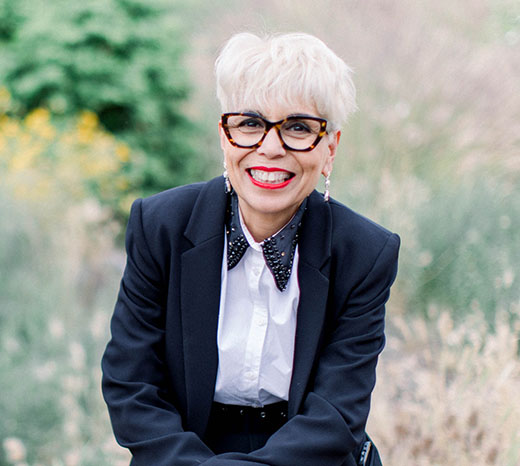
Elizabeth Felix, LPC

Elizabeth Felix, LPC

M.A. Professional Counseling, Ottawa University M.A. Human Resources and Substance Abuse, Ottawa University B.A. Psychology, Ottawa University<

Laura Reed, LPC

M.S. Professional Counseling, Grand Canyon University B.S. Psychology, Grand Canyon University

Rebecca Fregoso, LPC

Rebecca Fregoso, LPC

M.S. Counseling, University of Phoenix, B.A. Psychology, California State University
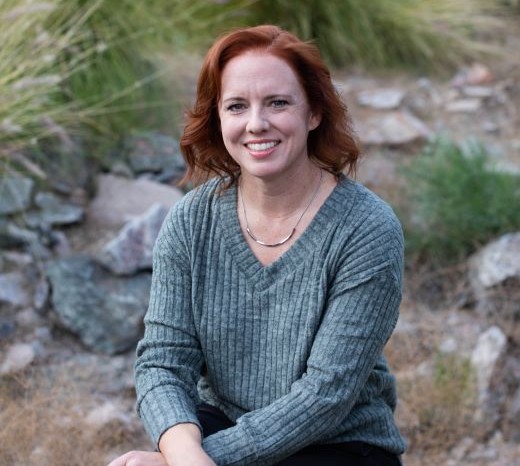
Kirsten Eby

Kirsten Eby, LPC, ATR-BC

M.S. Art Therapy Counseling Southern Illinois University, Edwardsville M.A. Teaching, Elementary American University B.A. Psychology & Sociology Tulane University

Our Location Near Scottsdale, AZ

We see Scottsdale clients at our Phoenix office beside Biltmore Fashion Park, at 24th Street and Camelback. From Scottsdale Road it is a direct drive west on Camelback Road, about 20 minutes from Old Town. Parking is available on site. Online sessions are open to any Arizona resident.

Biltmore Psychology and Counseling

Address:

6245 N 24th Parkway, Suite #106 Phoenix, Arizona 85016

Phone:

(480) 999-7070

Hours:

Monday – Friday, 9:00 am – 5:00 pm

BPC icon

Free 10-Min Consultation

A 10-min consultation can help you determine whether our services would be the right fit for you. Contact us to schedule a phone consultation.

"*" indicates required fields

This field is for validation purposes and should be left unchanged.
Name*